
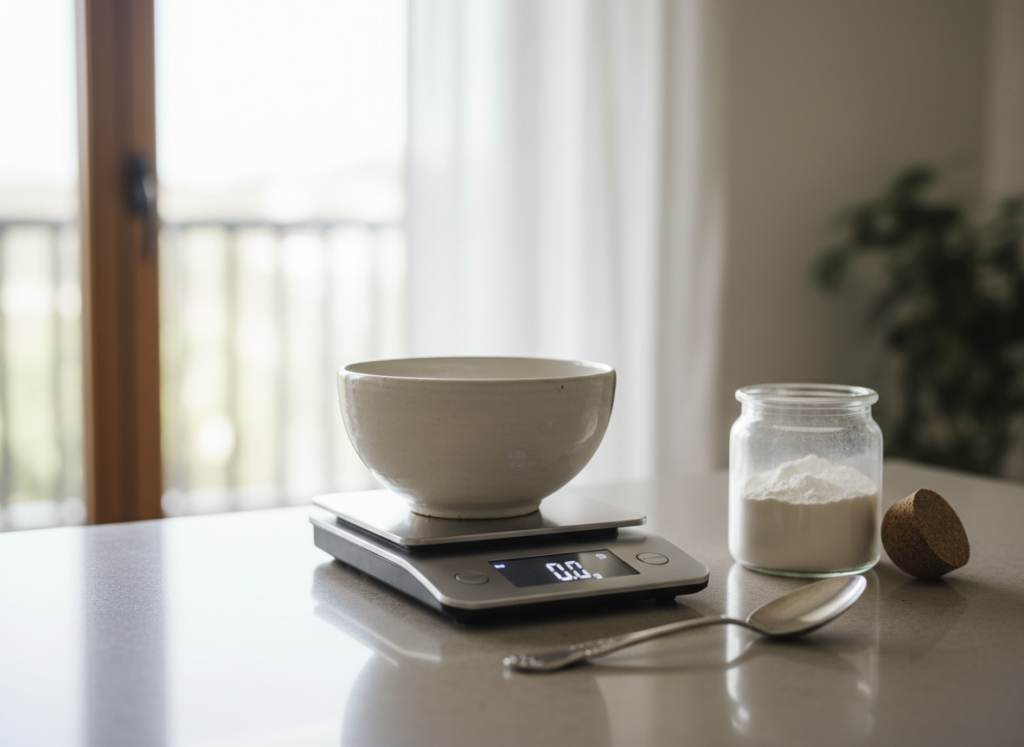
You don’t need a marble countertop, a stand mixer that costs rent, or a pastry degree from the University of Stress. You need one thing most people skip: Measure With Intention. Because “a cup” is not a personality trait—and “I eyeballed it” is how you end up with bakes that are fine… when you were aiming for main character dessert.
The Bougie Basic (in one sentence)
Slow down for 30 seconds and measure the way the recipe is asking you to measure. That’s it. That’s the upgrade.
Not glamorous. Not viral. Just… effective. Like a good bra.
When measuring is off, everything downstream gets weird: dry cakes, dense cookies, bars that never set, frosting that won’t behave, and a kitchen full of questions. When measuring is right, your batter feels calmer—and your results look like you’ve been gatekeeping a secret bakery life.
Now let’s get into the three ingredients that cause the most chaos when you measure them.
Step-by-step: how to measure like a Bougie Baker (aka: stop bullying your ingredients)
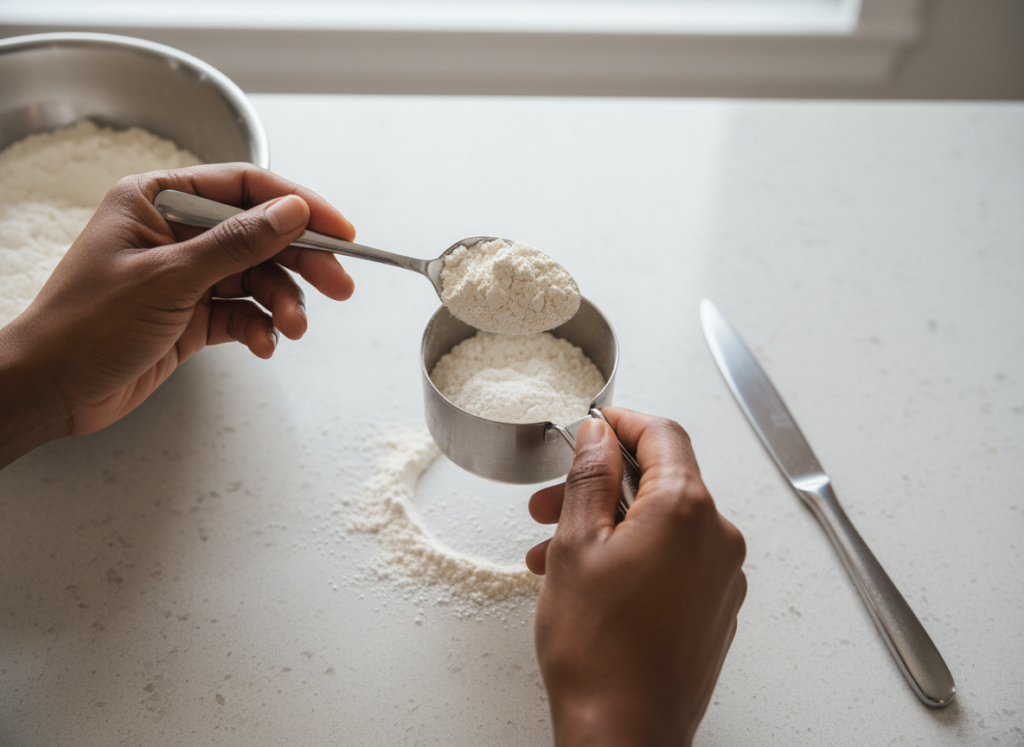
1) Flour: spoon + level (no digging)
If you take one thing from this post, let it be this: stop scooping flour like you’re in a sandbox.
What to do
- Fluff the flour in the container with a spoon. (Wake her up. She’s been packed in there.)
- Spoon flour into your measuring cup until it’s heaping.
- Use the back of a knife to level it off. (Not your finger. We are not finger-painting.)
Why it matters
Scooping your cup straight into the bag packs flour down. Packed flour = more flour than the recipe intended = dry, tight, “why is this giving cornbread?” energy.
Common mistakes
- Digging the cup into the flour bag like you’re searching for emotional support
- Shaking/tapping the cup to “make room” (for what? more flour??)
- Compressing flour to get an “even” cup (it’s even. It’s just wrong.)
If you want to go full precision, here’s King Arthur Baking’s guide to measuring flour.
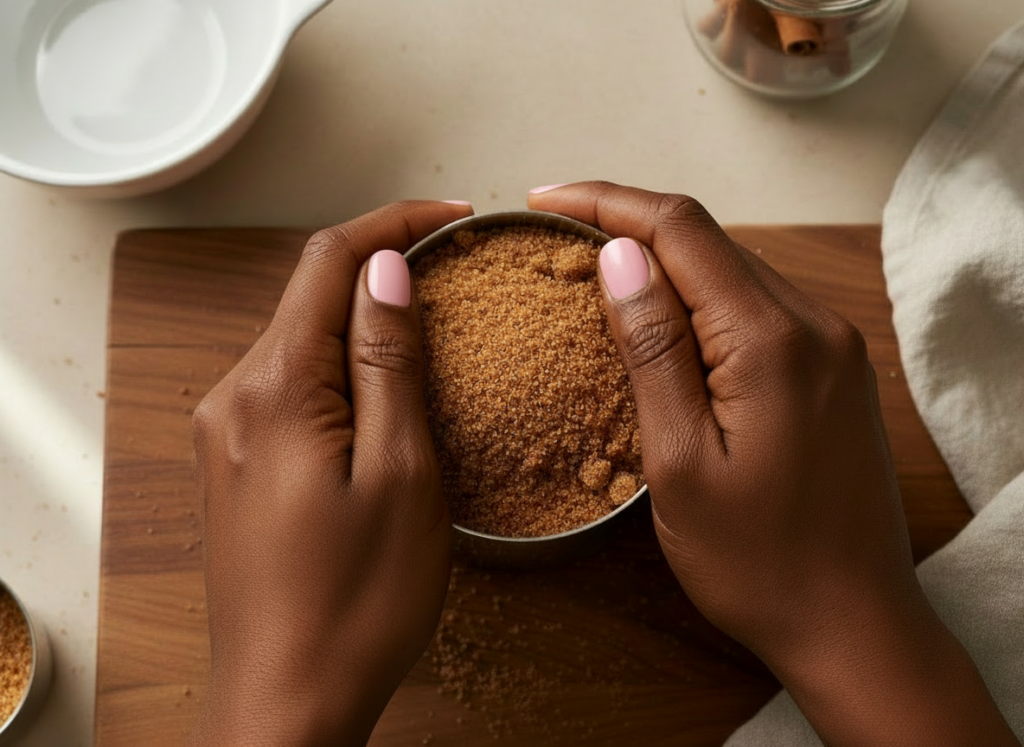
2) Brown sugar: pack it on purpose
Brown sugar is the one ingredient that’s like, “Yes, press me. Firmly.” Consent is clear here.
What to do
- Spoon brown sugar into the cup.
- Press it down firmly with your fingers or the back of a spoon.
- Add more and pack again until it’s level.
Why it matters
Most recipes assume brown sugar is packed. If you don’t pack it, you’re using less sugar and less moisture than intended—hello dry cookies, crumbly bars, and bakes that feel a little… unfinished. Like they left the house without lip gloss.
Common mistakes
- Treating brown sugar like flour (light and fluffy)
- Using rock-hard brown sugar and calling it “fine” (it’s not fine, babe—it’s a weapon)
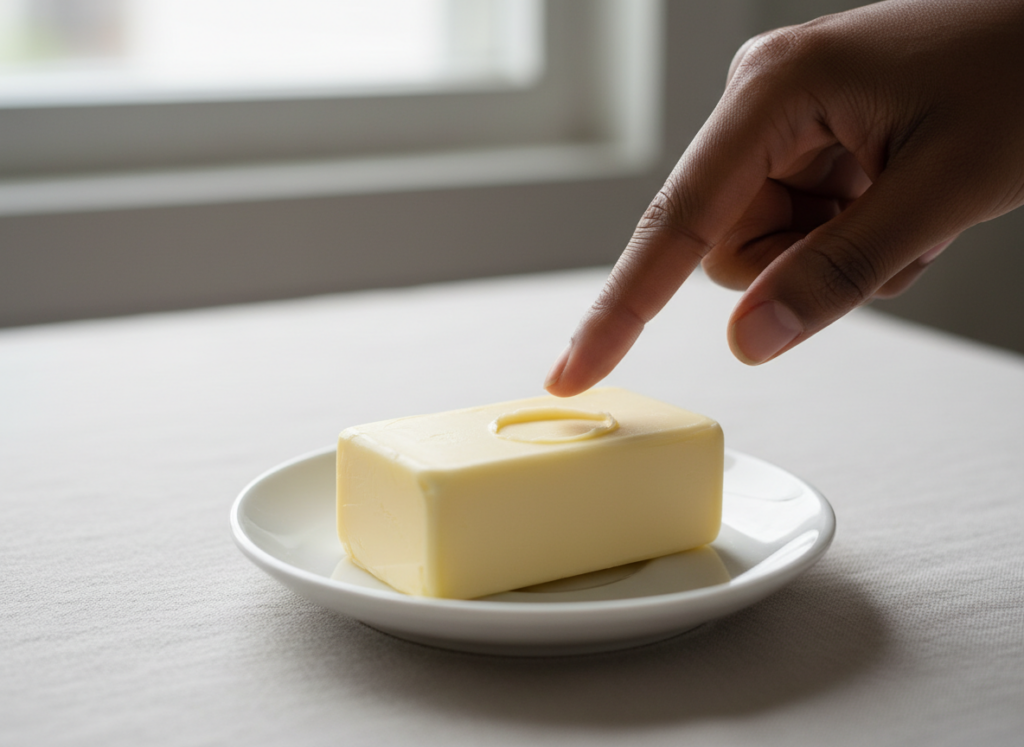
3) Butter: softened means fingerprint-soft
“Softened” does not mean melted. If your butter is shiny, it’s not softened—it’s stressed.
What to do Butter should be cool-soft, not greasy or puddly. Press your finger into it:
- It should leave a clean indentation.
- It should not collapse like it heard bad news.
Why it matters
Softened butter creams properly: it traps air, builds structure, and sets you up for a tender crumb. Melty butter can’t trap air—it can barely trap a thought.
Common mistakes
- Microwaving butter until it’s half liquid and half regret
- Using butter straight from the fridge (too cold to cream; you’ll just beat it into submission)
- Guessing instead of checking with a quick press (we don’t freestyle fundamentals)
Quick troubleshooting (because your kitchen is not a lab)
And because real kitchens are real (and nobody has time for a baking identity crisis), here’s the quick fix section.
“My bake came out dry.”
Most likely: too much flour (scooped/packed) or not enough brown sugar (not packed).
Fix next time:
- Spoon + level flour
- Pack brown sugar
- If you can, switch to weighing flour (coming soon, because yes—your scale deserves rights)
“My cookies spread too much.”
Most likely: butter too warm/melty.
Fix next time:
- Let butter soften on the counter (not the microwave—put the button DOWN)
- If your kitchen is warm, chill the dough 15–30 minutes before baking
“My cookies are thick but kind of dense.”
Most likely: too much flour or butter too cold to cream well.
Fix next time:
- Spoon + level flour
- Make sure butter is fingerprint-soft before creaming
“My brown sugar is a brick.”
You’re not alone. Brown sugar loves drama.
Fast fix:
- Microwave brown sugar with a damp paper towel for 10–15 seconds (repeat as needed)
The 60-second pre-bake check (aka: don’t start messy)
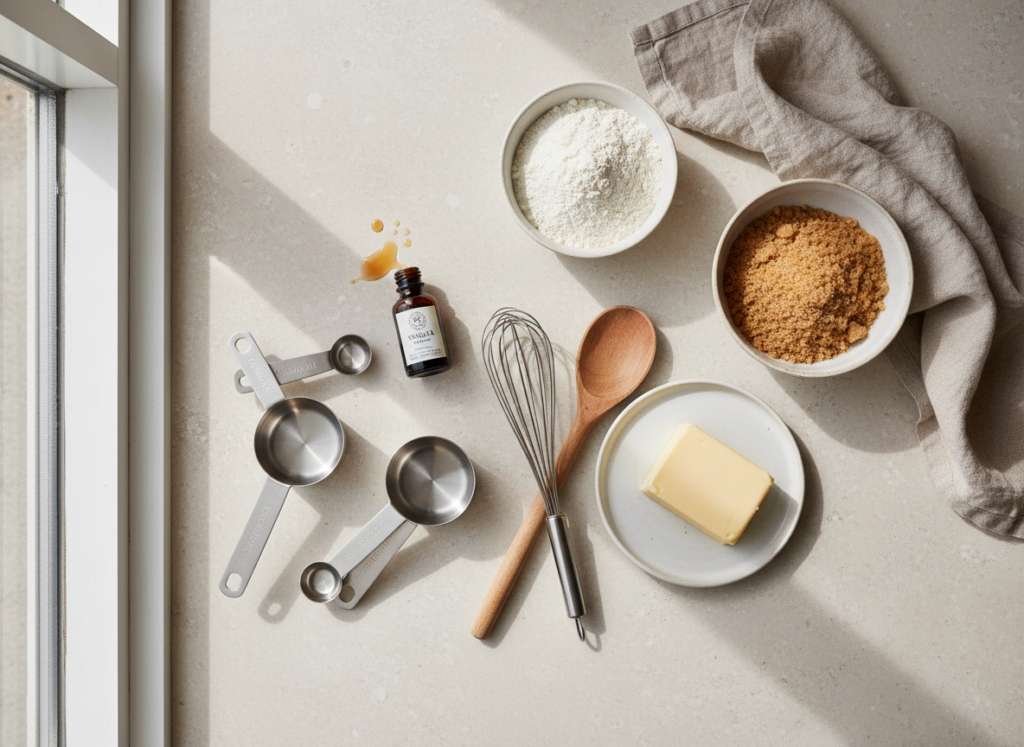
Before you measure anything, ask:
- Am I rushing? (If yes, pause. The oven will still be there.)
- Do I have the right tools? (Dry measuring cups, a spoon, a leveler.)
- Is my butter actually softened? (Fingerprint test. Not vibes.)
This is how “home baker” turns into home baker with range.
Want the full Bougie reset?

If you want to make this your new default—not a one-time ‘I’ll try’—this is the part you’ll love.
Download my free ritual: Before You Turn On The Oven—a simple, grounding checklist that makes every bake feel better (and come out better).
Get the ritual + join the Bougie Baker Society email list for elevated techniques, flavor-forward recipes, and first dibs on what’s coming next.
P.S. Hit reply to any email and tell me what you’re baking next—cakes, cookies, or bars—and I’ll send you a tip that matches your mood. Because we don’t do generic over here.
Leave a Reply